
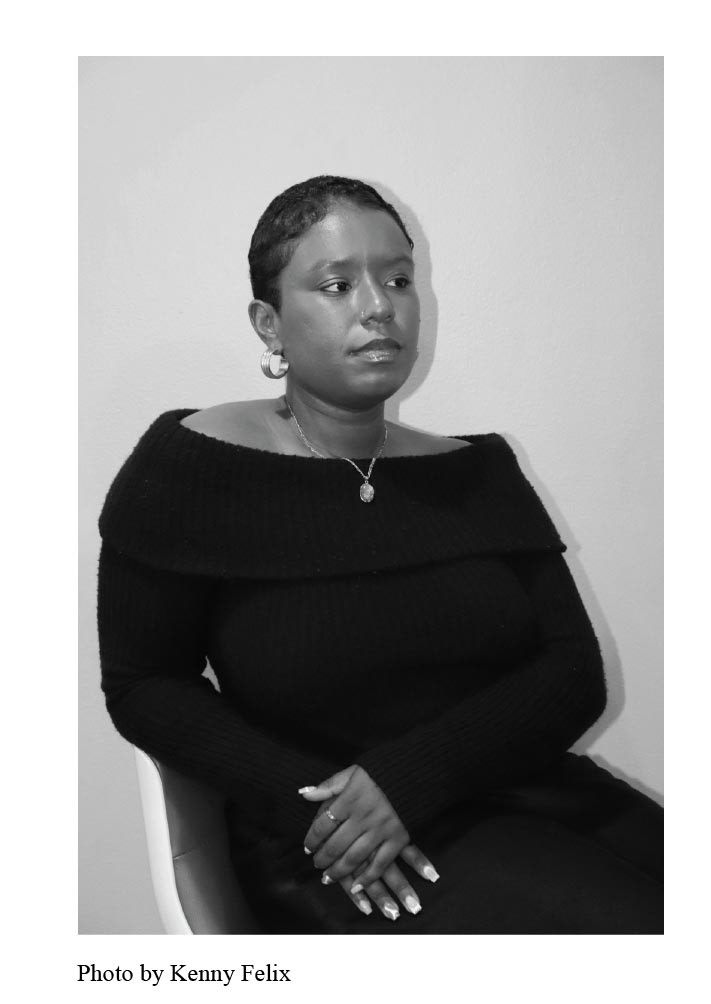
Lauryn Lawrence’s work begins with a conversation. “Through my work,” she says,“I illuminate the spaces where human experiences intersect and diverge.” Across photography, video, and installation, Lawrence approaches image-making as a care-driven practice. One rooted in lived experience, sustained dialogue, and shared authorship. An artist and curator working from an Afro-Latina (Dominican and Jamaican) intersectional feminist perspective, Lawrence’s practice centers memory, vulnerability, and the everyday rituals that shape how we understand home. Her projects often emerge through long-term relationships with collaborators, prioritizing trust and presence over spectacle. Documentation, in her hands, becomes a reciprocal act; one that preserves experience while honoring agency. “I approach photography through a care-conscious lens,” Lawrence explains. “My commitment is to documenting and memorializing the people and spaces with whom I build tender, sustained connections.” Rather than extracting images, her work unfolds through collaboration, allowing participants to shape how they are seen and remembered.
Women I Know (2020–2021)
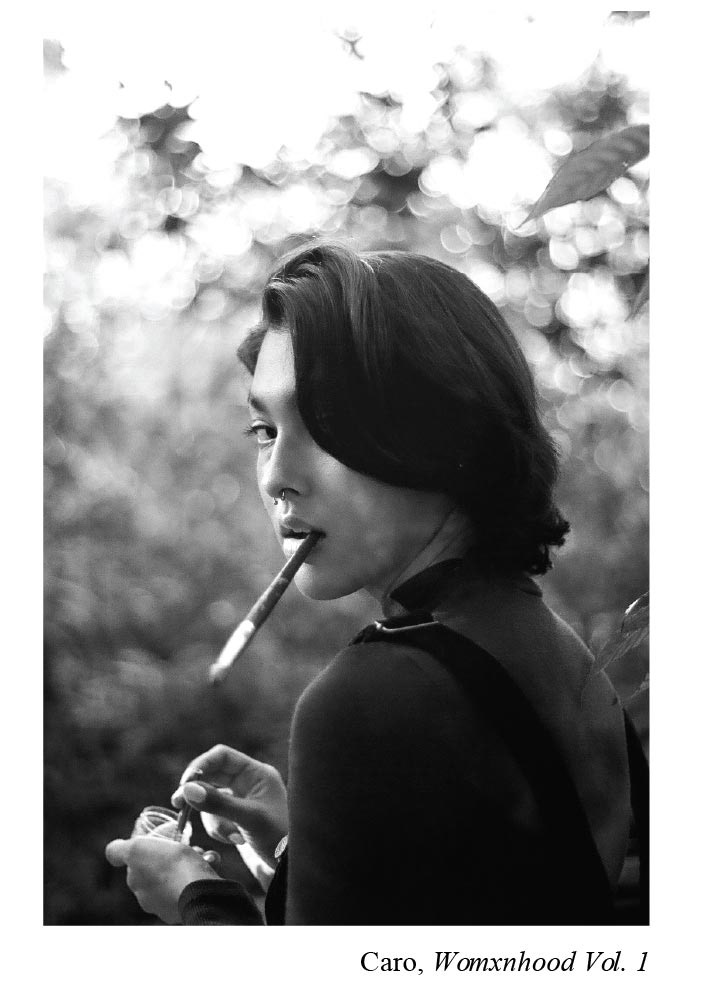
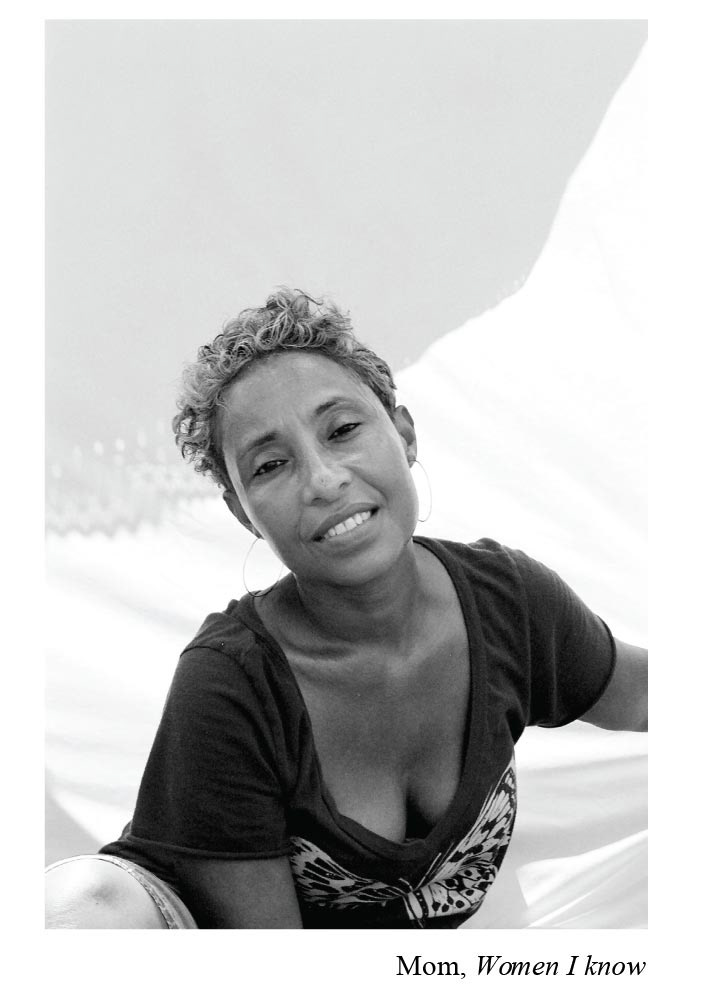
One of Lawrence’s most formative bodies of work, “Women I Know”, grew out of ongoing conversations with her mother about matriarchy within Dominican heritage; where, as Lawrence describes it, “women both run the home and are the home.” The series celebrates the women who empower her daily, positioning them not as subjects to be observed, but as active participants in a shared inquiry. taking a sociological approach, Lawrence posed the same question to each woman involved in the project, inviting reflections that revealed both difference and strength.“I wanted to Mom, Women I know Caro, Womxnhood Vol. 1 explore how empowerment shows up individually,” she says, “while also acknowledging what it looks like collectively, how showing up authentically becomes a form of giving back.” Shot predominantly on 35mm Ektar 100 film, the series underscores the social responsibility of documentation. Each portrait carries the weight of trust and presence, emphasizing who life guides us to and alongside. Women I Know was presented as a solo exhibition at Up 2 Something Studios in Wynwood, Florida, in March 2021, accompanied by a screening of an associated short video. Selected works include Mom (2020) and The Fabiens (2020), both chromogenic prints that reflect the project’s intimate yet expansive approach to portraiture.
Womxnhood, Volume I (2021–2022)
Lawrence’s later series, Womxnhood, Volume I, expands her inquiry into identity and agency through a photojournalistic lens. The project explores what womxnhood and feminism mean to women within South Florida communities, centering lived experience over fixed definitions. “This body of work nourishes conversations around intersectionality, sacred spaces, and vulnerability,” Lawrence says. Each participant engages feminist frameworks through their own personal narratives, contributing to a collective dialogue shaped by difference rather than uniformity. Shot predominantly on 35mm film, Womxnhood reaffirmed photography as an anchor for storytelling and connection within Lawrence’s practice. The series was presented as a solo exhibition at the Emilio Martinez Gallery in North Miami in August 2022, curated by Laura Bustamante. Works such as Emmy (2021) and Caro (2021) exemplify the project’s commitment to agency, scale, and presence.
Practice, Theory, and the Gaze
Lawrence’s work is deeply informed by both personal history and critical theory. Drawing from her Jamaican and Dominican heritage, she situated her practice within broader conversations around the gaze, power, and representation. Texts such as Black Looks: Race and Representation by bell hooks, Black Feminism Reimagined by Jennifer C. Nash, and Discipline and Punish by Michel Foucault shape her understanding of visibility, control, and resistance within image-making. Still, Lawrence’s approach remains tender. “Care, presence, and relational engagement drive both my material choices and the way I move through each project,” she notes. By working within spaces she collectively inhabits with her collaborators, she allows the work to speak to personhood, memory, and home; without flattening complexity.
Looking Ahead
Lawrence is currently developing a predominantly black-and-white series that began during her graduate studies in London. The project examines how individuals create a sense of home within spaces known to be temporary, such as student accommodations. By inviting fellow students to document their living spaces, she fostered community among those navigating homesickness, displacement, and transition. “This process was about meeting someone for the first time in their home,” Lawrence says,“and leaving with a deeper connection.” The work reflects on how home exists not only in place, but within the self; carried through memory and preserved through images that linger beyond their moment.